

 Español
 Deutsch
All about tea, Recipes with tea and herbal infusions, Teas in Horeca
Cold Brew Tea for Hospitality: How to prepare and serve tea in cold
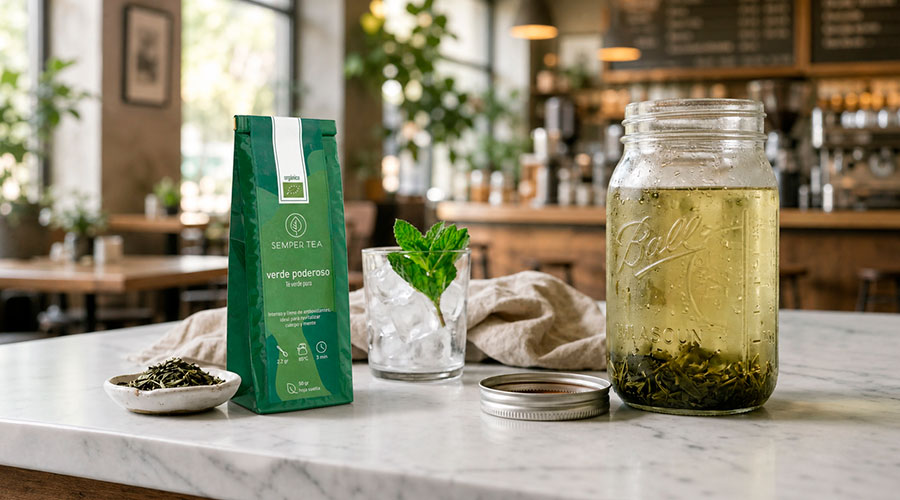
Cold Brew Tea is becoming much more than a passing trend. The cold-extraction method, initially familiar to many consumers through speciality coffee, is now finding its own place in the world of tea and herbal and fruit infusions.
For cafés, hotels, restaurants, terraces and wellness spaces, it offers a particularly interesting opportunity: to create an entirely new category of drinks using teas and infusions that may already be part of the menu, simply by changing the preparation method.
A fruit infusion served hot and the same blend steeped slowly in cold water for several hours can offer two very different experiences. The same applies to green tea, rooibos and herbal blends.
This is precisely one of the biggest advantages of Cold Brew Tea for hospitality. Refreshing a drinks menu does not necessarily require adding complicated new ingredients or increasing operational complexity.
Sometimes, changing the brewing method is enough.
What is Cold Brew Tea?
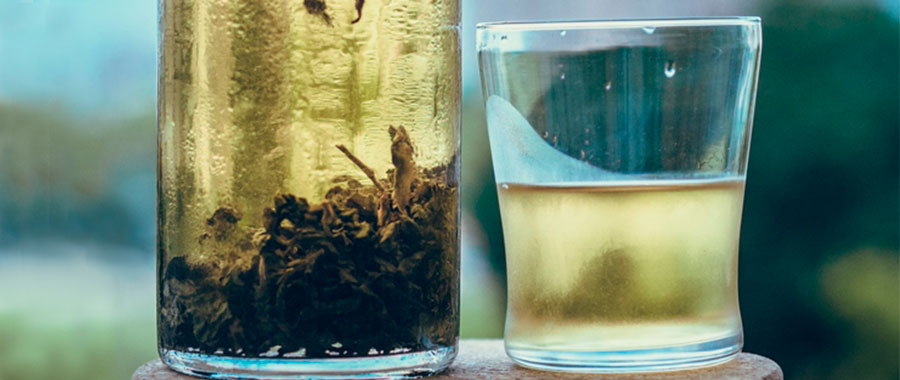
Cold Brew Tea is tea or an infusion prepared through slow extraction in cold water.
In traditional brewing, hot water extracts aromas, flavours and soluble compounds from tea leaves, fruit, flowers or herbs within just a few minutes.
Cold brewing works differently.
Tea or an infusion is placed directly into cold water and allowed to steep slowly for several hours, usually under refrigeration.
It is not brewed hot first and chilled afterwards.
That is the key difference.
Time effectively takes the place of temperature. Instead of a rapid hot-water extraction, cold water gradually draws out the aromatic components of the ingredients.
Depending on the tea used, the result can have a more delicate flavour profile and a different balance of perceived sweetness, bitterness and astringency.
For hospitality professionals, this creates plenty of room for experimentation.
Because Cold Brew Tea is not simply “tea with ice”.
It is a different brewing technique.
Cold Brew Tea vs iced tea: are they the same thing?
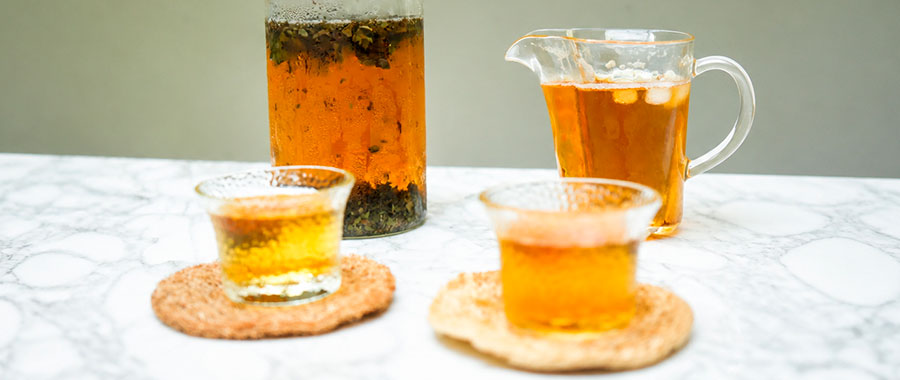
The terms are often used interchangeably, but the methods are different.
Traditional iced tea
Tea or an infusion is brewed with hot water and then chilled.
This can be done by:
- brewing hot and refrigerating afterwards;
- making a concentrated brew and adding ice;
- using the flash chill method, where hot tea is poured directly over a calculated amount of ice.
Cold Brew Tea
The tea or infusion begins its extraction directly in cold water and remains refrigerated for several hours.
In other words:
All Cold Brew Tea is cold tea, but not all iced tea is Cold Brew Tea.
The distinction may seem small, but from a culinary perspective it matters because each method develops different characteristics.
At Semper Tea, we have already explored different ways of preparing iced tea, as well as the cold-brew method using our Cesta de Frutas organic fruit infusion.
Know more about: How to make iced tea
Cold brewing allows hospitality businesses to go one step further and treat Cold Brew Tea as a genuine category within a professional drinks menu.
Why offer Cold Brew Tea in a café, hotel or restaurant?
Drinks menus are changing.
Guests increasingly look for alternatives to coffee, conventional soft drinks and juice. Matcha, plant-based drinks, infusions, kombucha, mocktails and chilled speciality drinks are becoming part of the vocabulary of modern hospitality.
Within this context, cold-brewed tea offers several advantages.
1. Refresh the menu using products you already know
A venue can work with the same green tea, rooibos or fruit infusion throughout the year.
In winter, it can be served hot.
When temperatures rise, those same teas can become:
- Cold Brew Tea;
- fruit tea served cold;
- a base for signature drinks;
- alcohol-free alternatives;
- breakfast drinks;
- terrace specials;
- buffet beverages;
- drinks for spa and wellness areas.
One product can therefore have several applications.
This makes stock management easier while helping venues get more value from their tea selection.
2. Easy to integrate into daily operations
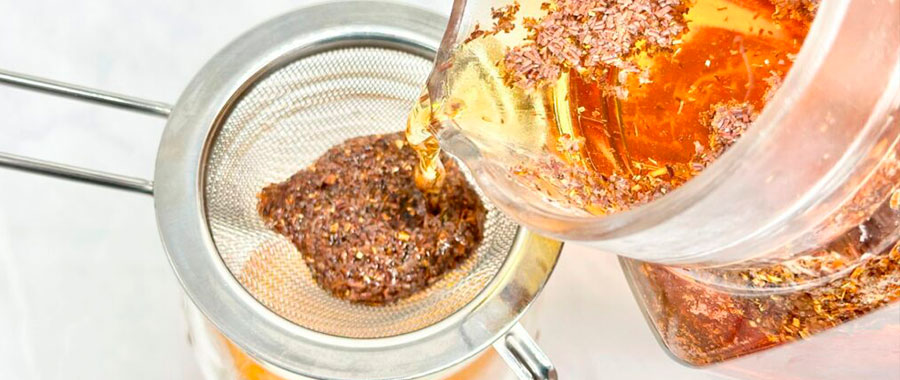
Cold Brew Tea does not necessarily require specialist equipment.
To get started, all you really need is:
- a clean food-safe jug or container;
- water;
- tea or an infusion;
- refrigeration;
- a filtering system when using loose-leaf tea.
Preparation can easily become part of the normal workflow.
For example, jugs can be prepared after the evening service so they are ready the following day.
For professional use, correct hygiene, clean containers and proper refrigerated storage are essential.
3. Higher perceived value
A tea bag and a cup of hot water are familiar to almost every guest.
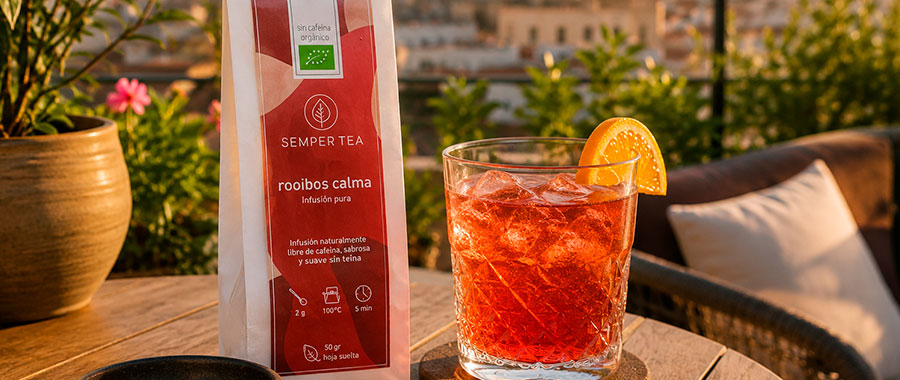
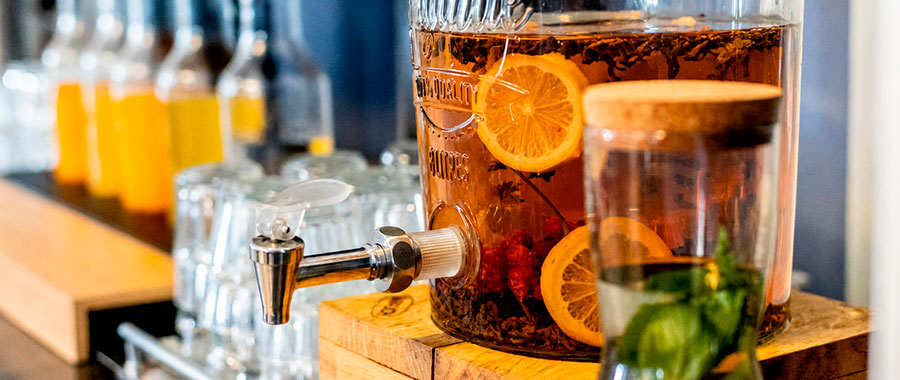
But serve that same infusion in an attractive glass with ice, a slice of orange, mint or berries, and the perception changes completely.
It is no longer simply “an infusion”.
It becomes a menu drink in its own right.
That creates an interesting opportunity for cafés, hotels and restaurants.
The aim is not simply to sell cold tea.
The aim is to create a drink with enough presentation and identity to deserve its own place on the menu.
How to prepare Cold Brew Tea for hospitality
There is no single universal recipe.
Brewing time and dosage depend on the type of tea, leaf size, ingredients, desired intensity and how the final drink will be served.
However, a simple starting point makes testing easy.
Basic preparation for 1 litre
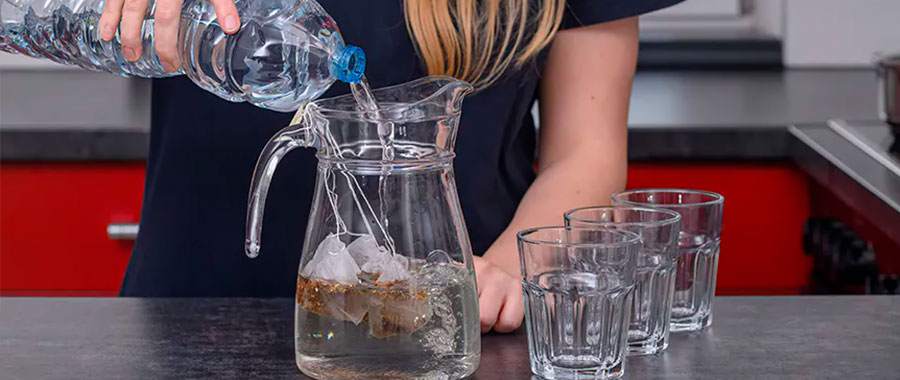
- Place the tea or infusion in a clean jug.
- Add 1 litre of cold water.
- Cover the container.
- Refrigerate immediately.
- Leave to infuse for several hours.
- Remove the tea leaves, bags or pyramids.
- Taste and adjust the strength.
- Keep refrigerated until service.
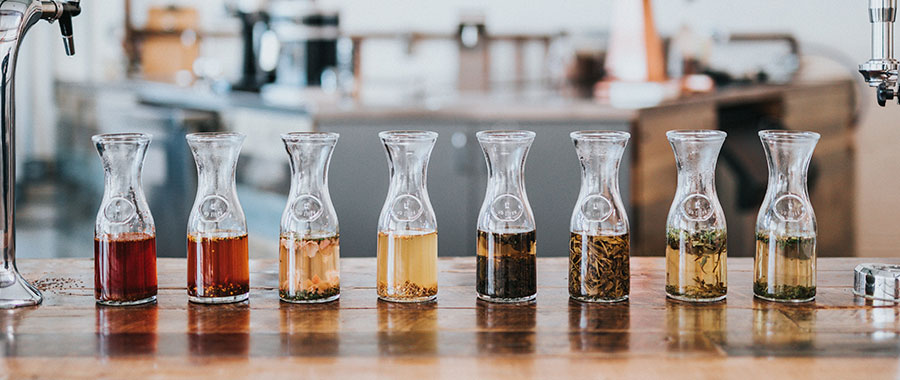
As an initial guideline, 6 to 12 hours is a useful testing range depending on the tea.
Fruit infusions often work well with longer steeping times.
Green teas are worth testing at different intervals to find the balance that works best for the particular blend.
Our advice for professionals is simple:
Run small tests and write down the results.
For example:
Green tea
- 1 litre water
- quantity used
- 6 hours
Then:
- same recipe
- 8 hours
After only a few tests, a standard recipe can be established and reproduced consistently by the whole team.
Water matters too
In a Cold Brew Tea, water makes up almost the entire drink.
So its quality matters.
A hospitality business does not need to turn tea brewing into laboratory science.
But one principle is worth following:
Develop the recipe with the same type of water that will be used during service.
If a café uses filtered water, for example, it makes sense to use that same water when developing its Cold Brew recipe.
Consistency is part of quality.
Which teas work best for Cold Brew?
One of the most enjoyable aspects of the method is experimentation.
There is no single “Cold Brew tea”.
Most major tea families and many herbal or fruit infusions can be explored, producing very different profiles.
Green Tea Cold Brew
Green Tea Cold Brew is particularly interesting for cafés and wellness environments.
Prepared cold, it can develop a light, fresh profile that works beautifully with:
- lemon;
- lime;
- cucumber;
- mint;
- fresh herbs;
- green apple;
- delicate fruit.
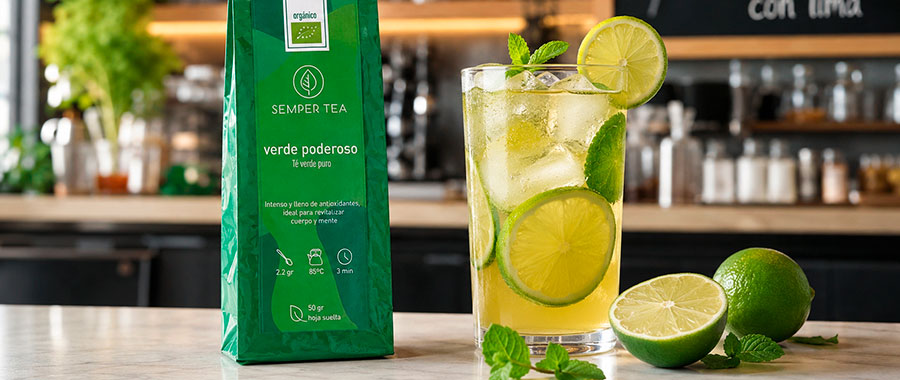
A simple menu option could be:
Green Cold Brew + Lime + Mint
Clean, refreshing and easy for customers to understand.
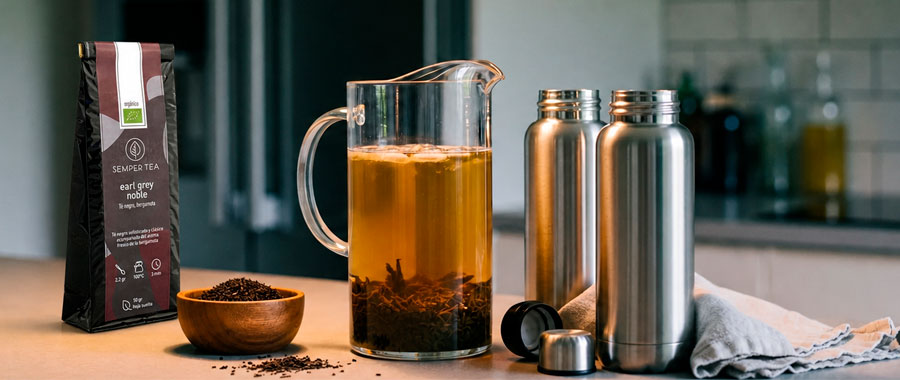
Black Tea Cold Brew
Black tea provides more body and can support stronger flavours.
It works well with:
- lemon;
- orange;
- peach;
- cinnamon;
- vanilla;
- berries.
It is also an excellent base for a more premium interpretation of classic iced tea.
The key difference is the story:
slowly cold brewed.
That small detail immediately helps guests understand that they are ordering something different from a standard iced tea.
Rooibos Cold Brew: a naturally caffeine-free option
Rooibos deserves special attention.
Because it is naturally caffeine-free, it can be offered throughout the day.
It works particularly well with:
- orange;
- lemon;
- apple;
- cinnamon;
- berries;
- vanilla.
For hotels and restaurants, Rooibos Cold Brew can be particularly useful when a guest asks for a refreshing drink without caffeine.
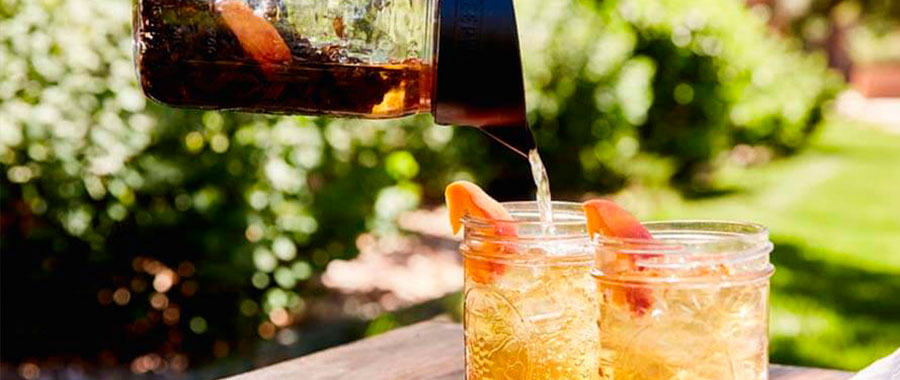
Fruit infusions as Cold Brew
Fruit infusions are probably one of the easiest categories to introduce.
Blends containing hibiscus, apple, rosehip, citrus fruit and berries can produce highly aromatic and visually appealing drinks.
For example:
Berry Cold Brew + Strawberry + Orange
or simply:
Fruit Cold Brew served over ice with a slice of orange.
At Semper Tea, our Fruit Garden Bio fruit infusion is one example of a blend that can be cold brewed for approximately 8–12 hours.
Cold-brewed herbal infusions
Mint, ginger, lemongrass and herbal blends offer another range of possibilities.
Contrasts work particularly well:
freshness + citrus
or
spice + fruit
For example:
- mint + lime;
- ginger + lemon;
- apple + mint;
- herbs + cucumber;
- rooibos + orange.
There is no need to overload the drink.
When the base infusion is aromatic, two carefully chosen elements are often enough.
On a professional menu, less can definitely be more.
5 Cold Brew Tea ideas for a professional menu
1. Green & Lime Cold Brew
- Base: organic green tea
- Addition: lime and mint
- Serve: tall glass with ice
- Fresh, straightforward and easy to understand.
- Ideal for cafés, terraces, hotel breakfasts and wellness spaces.
2. Berry Cold Brew
- Base: organic berry or fruit infusion
- Addition: strawberry or mixed berries
- Serve: clear glass or stemless wine glass over ice
- Menu description:
- Organic fruit infusion, slowly cold brewed.
3. Rooibos Orange Cold Brew
- Base: organic rooibos
- Addition: orange peel or orange slice
- Optional: a touch of cinnamon
- A caffeine-free option suitable throughout the day.
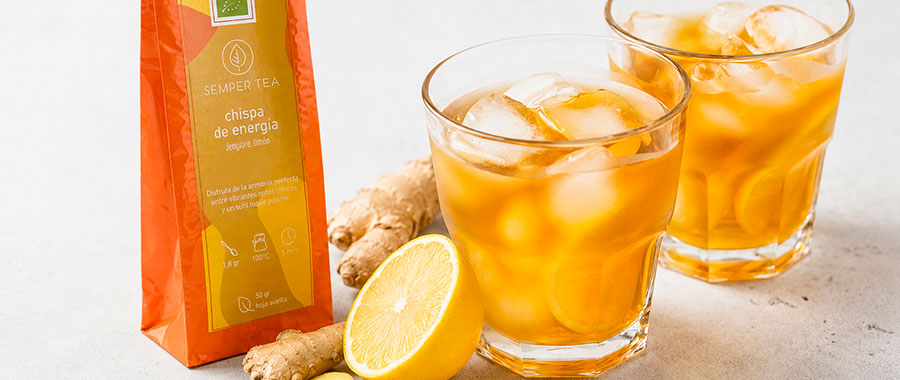
4. Ginger Lemon Cold Brew
- Base: ginger and lemon infusion
- Addition: fresh lemon
- Serve: plenty of ice and a thin slice of lemon
- A clear name such as Ginger Lemon Cold Brew often works very well because guests immediately know what to expect.
5. Apple Mint Cold Brew
- Base: apple and mint infusion
- Addition: green apple
- Serve: glass with ice
- The balance between fruit and freshness makes this a versatile option for terraces and afternoon service.
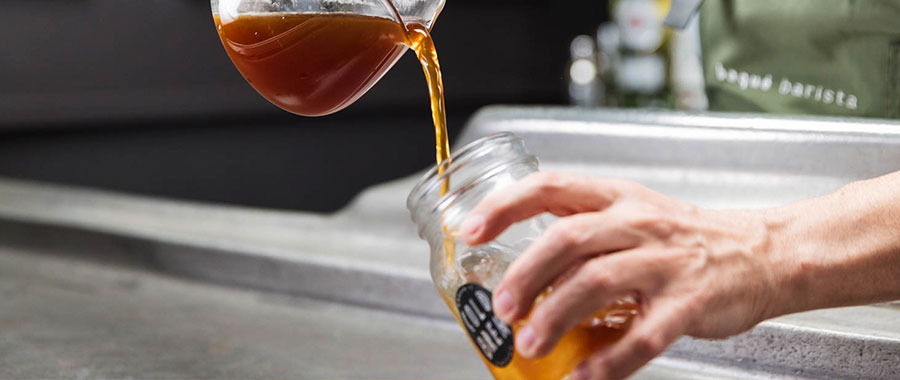
Cold Brew Tea in cafés
Cafés are probably one of the easiest environments in which to introduce the concept.
Customers are already familiar with terms such as:
- Cold Brew Coffee;
- Iced Latte;
- Matcha Latte;
- Iced Matcha;
- speciality drinks.
Adding Cold Brew Tea to this vocabulary feels completely natural.
A small menu could offer only two varieties:
Green Cold Brew
Organic green tea, slowly cold brewed with lime and mint.
Berry Cold Brew
Organic fruit infusion, cold brewed and served with berries.
There is no need to offer ten versions.
Two carefully prepared, clearly explained and beautifully presented drinks are enough to test customer response.
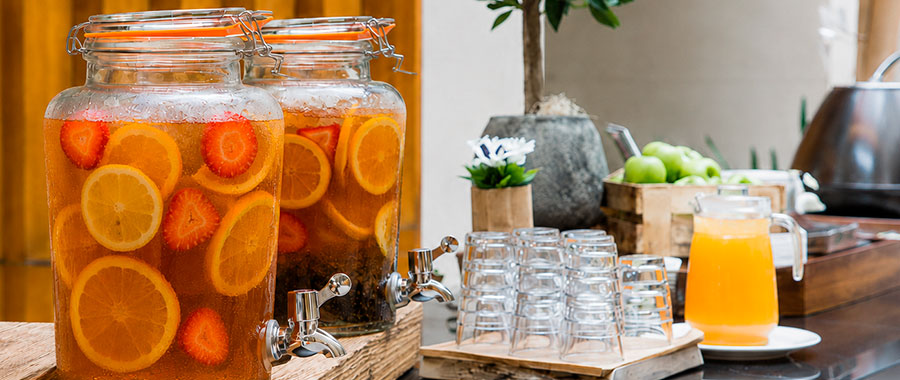
Cold Brew Tea in hotels
Hotels offer even more consumption occasions:
- breakfast;
- buffet;
- pool;
- terrace;
- rooftop;
- spa;
- wellness area;
- meeting rooms;
- welcome drink;
- bar;
- room service.
Imagine a jug of organic fruit infusion next to flavoured waters at breakfast.
Or a Green Cold Brew as a welcome drink.
Or a chilled Rooibos in the spa.
The tea is the same.
The context and guest experience are what change.
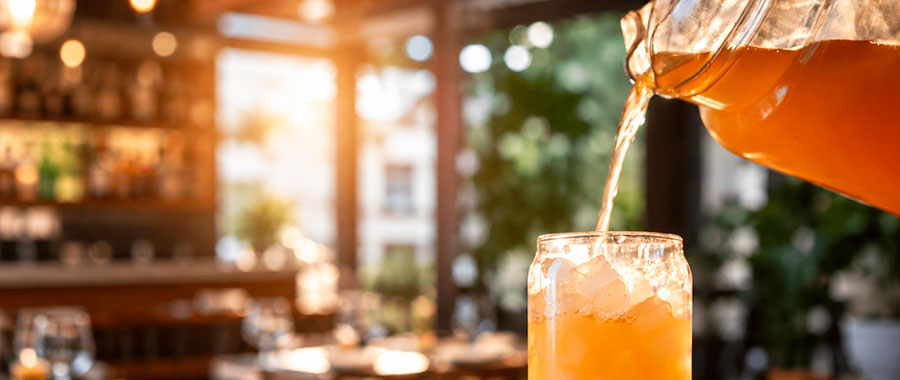
Cold Brew Tea in restaurants
Restaurants have another interesting opportunity:
non-alcoholic food pairing.
More guests now want an interesting drink with their meal without necessarily choosing wine, beer or a soft drink.
Cold-brewed teas and infusions can be developed using:
- fruit;
- citrus;
- spices;
- herbs;
- different levels of intensity.
A black tea can complement richer dishes.
Green tea may work with more delicate preparations.
Fruit infusions can fit brunches, desserts and afternoon service.
The aim is not to impose strict pairing rules.
It is simply another tool for creating an interesting drinks programme.
Cold Brew for spas and wellness spaces
The concept fits especially naturally here.
In a spa, boutique gym, beauty centre or wellness hotel, presentation matters almost as much as flavour.
A clear jug filled with fruit infusion, citrus and ice can become part of the visual experience.
It also offers an alternative to:
- plain water;
- juices;
- soft drinks;
- coffee.
Often, these small details are exactly what make an experience feel premium.
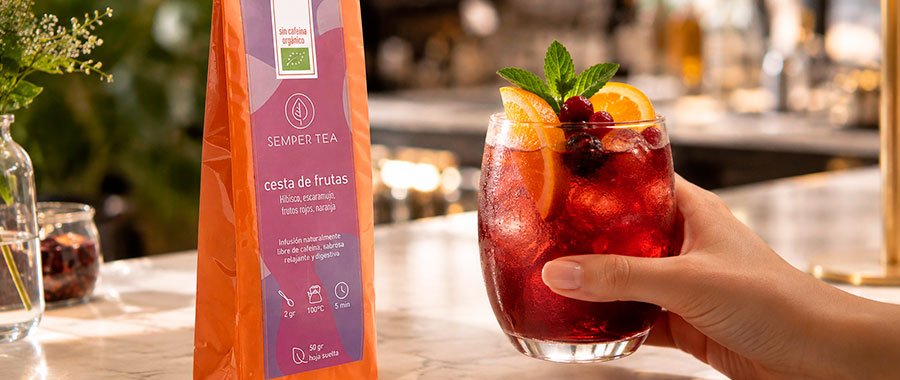
Organising Cold Brew within daily operations
A great recipe loses its value if every member of staff prepares it differently.
That is why we recommend creating a simple internal recipe sheet containing:
- product used
- quantity
- amount of water
- brewing time
- storage temperature
- serving style
- garnish
- glassware
For example:
Berry Cold Brew
- Fruit infusion: established quantity
- Water: 1 litre
- Brewing time: 8 hours refrigerated
- Serve: over ice
- Finish: orange + berries
- A simple specification like this makes it easy for every team member to reproduce the same result.
Tea pyramids or loose-leaf tea for Cold Brew?
Both can work.
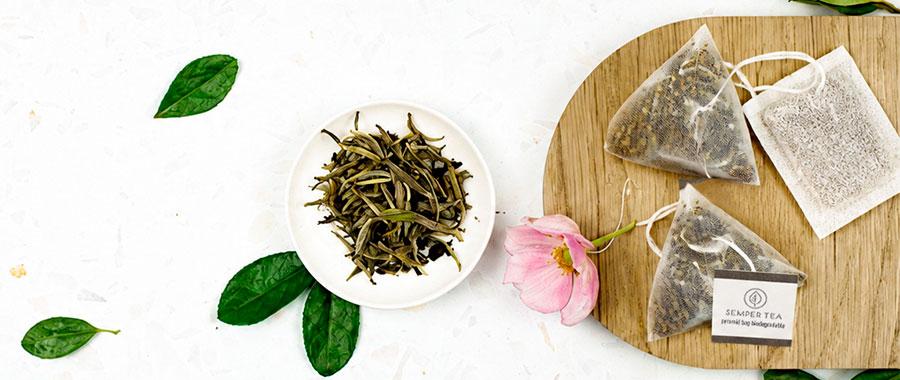
Tea pyramids
Particularly convenient for:
- testing;
- smaller batches;
- cafés with lower volume;
- individual preparations;
- smaller service points.
They simplify dosing and handling.
Loose-leaf tea
Loose tea offers greater flexibility for:
- jugs;
- dispensers;
- larger batches;
- signature recipes;
- regular high-volume service.
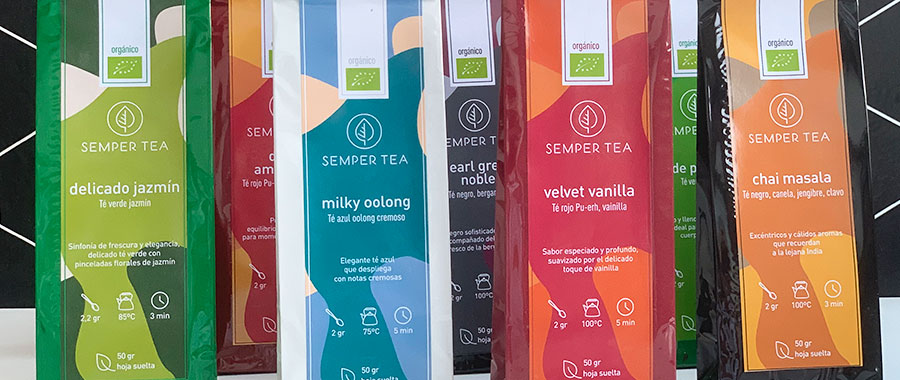
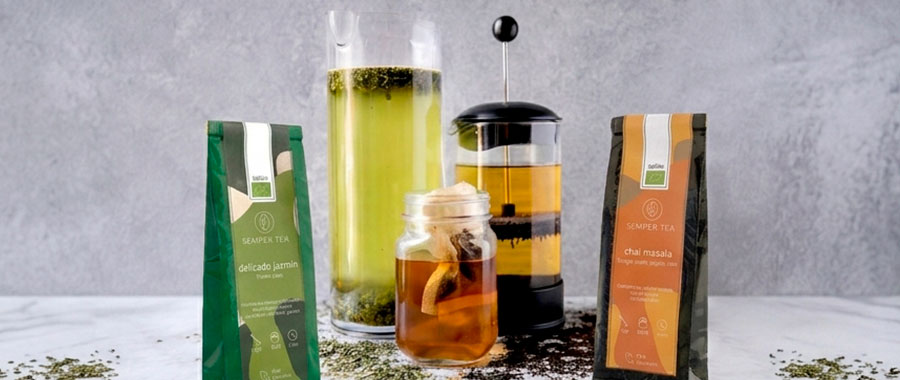
Semper Tea offers organic teas and infusions in different professional formats, making it easy to adapt the product to the type of service and expected volume.
Cold Brew does not need to make your menu complicated
A common mistake when introducing a new trend is to offer too many versions immediately.
There is no need.
Start with two or three clearly different flavour profiles.
For example:
- fresh: green tea + lime
- fruity: berries
- caffeine-free: rooibos + orange
- Three drinks.
- Three colours.
- Three distinct profiles.
Then let customer demand determine what comes next.
Does Cold Brew need sugar?
No.
Cold Brew Tea can be served perfectly well without added sugar.
In fact, we recommend tasting it first on its own.
If the venue wants a sweeter version, small amounts of the following can be used:
- honey;
- syrup;
- fruit;
- fruit purée.
The important point is not to hide the tea itself.
If all the guest can taste is syrup, a high-quality tea base has effectively disappeared.
Presentation: the other half of Cold Brew
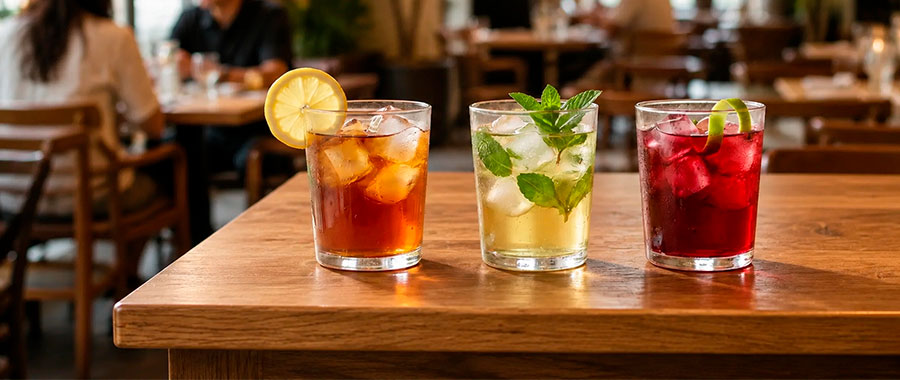
In hospitality, guests drink with their eyes too.
Simple options include:
- a thin slice of lemon;
- orange peel;
- mint;
- a strawberry;
- berries;
- apple;
- good-quality ice;
- a tall glass;
- a stemless wine glass;
- a glass bottle;
- a transparent jug.
A simple recipe with elegant presentation can have far more impact than an overloaded drink.
A useful rule is:
The garnish should help explain the flavour.
Cold Brew Tea: a trend that can also make commercial sense
A trend is only useful to a hospitality business if it can be incorporated sensibly into everyday operations.
Cold Brew Tea has an important advantage:
Its base remains water + tea or infusion.
Before setting a selling price, consider:
- tea cost;
- amount used;
- fruit or garnish;
- ice;
- takeaway packaging;
- preparation time;
- possible waste.
Production control is especially important.
Preparing ten litres when you only sell two is not efficient.
Start small, measure demand and increase production gradually.
Frequently asked questions about Cold Brew Tea for hospitality
What is Cold Brew Tea?
Tea or an infusion extracted directly in cold water over several hours.
Is Cold Brew Tea the same as iced tea?
Not exactly. Iced tea may be brewed hot and chilled afterwards. Cold Brew starts directly in cold water.
How long should Cold Brew Tea steep?
It depends on the blend, but around 6–12 hours is a useful starting point.
Can green tea be cold brewed?
Yes. Green tea is particularly suitable and pairs beautifully with citrus fruit and fresh herbs.
Can rooibos be cold brewed?
Yes. Rooibos is naturally caffeine-free and is an excellent option for cold drinks.
Can fruit infusions be used?
Absolutely. Blends containing hibiscus, apple, rosehip, citrus or berries are particularly interesting.
Can Cold Brew be made with tea bags or pyramids?
Yes. Pyramids are particularly convenient for tests and smaller batches.
Can Cold Brew be prepared the day before?
Yes. In fact, advance preparation is one of the main operational benefits for hospitality businesses.

Cold Brew Tea: a new way of serving tea
For many years, tea in hospitality was considered almost exclusively a hot drink.
But tea offers far more possibilities.
Cold Brew Tea turns green tea, black tea, rooibos, fruit and herbs into contemporary drinks for cafés, hotels, restaurants, terraces and wellness spaces.
It does not necessarily require major investment.
Nor does it require a huge drinks list.
Three things matter most:
quality ingredients, a consistent recipe and thoughtful presentation.
At Semper Tea, we offer organic teas and infusions in different professional HORECA formats and can help businesses select the most suitable varieties for Cold Brew according to their type of venue, expected consumption and style of service.
Because innovation does not always mean adding more products.
Sometimes it simply means discovering a new way to prepare the ones you already have.